NEW CASE STUDY: Shaping the Next Phase of Distributed Energy in Colorado




September 29, 2026

Case Study Highlights:
-
Xcel projects significant investment in its Colorado system over the next two decades, with costs growing from $14.76 billion to $78.5 billion.
-
Delivery infrastructure, including transmission and distribution (T&D), accounts for nearly two-thirds of total utility capital spending.
-
Pivot Energy worked with a coalition of partners to pass new legislation that created the Dispatchable Distributed Generation (DDG) program.
-
The DDG program is expected to procure at least 130 MW through 2027, creating a new pathway for Distributed Energy Resources.
The Challenge
A Stressed System That Doesn't Value Local Demands.
In 2024, Colorado was confronting a new energy reality. Power demand was rising, driven by economic growth, electrification, and emerging large loads such as data centers. Xcel Energy's own forecasts projected significant growth in electricity demand alongside a rate base expected to more than quadruple over the next two decades, from $14.76 billion to $78.5 billion.1
The traditional utility approach to meeting new demand relies heavily on large, remote generation facilities far from major load centers, such as the Denver metro area. Delivering that power requires substantial investment in transmission and distribution infrastructure, costs ultimately borne by utility customers. Overwhelming reliance on faraway power meant that nearly two-thirds of Xcel's proposed $120 billion spending plan over the next two decades focused on the cost of delivering power, including building out more distribution and transmission lines. And like is true nationwide, delivery-related costs were putting serious upward pressure on electricity rates for households and businesses.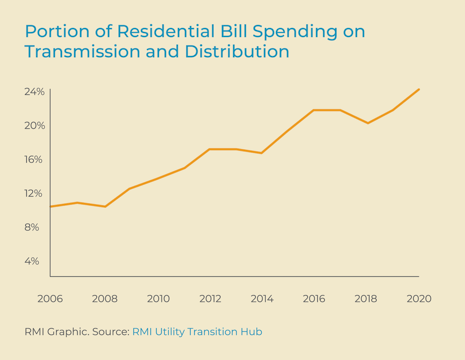
Traditionally, Colorado's resource procurement framework did not account for the locations of new resources. Large, remote utility-scale projects therefore, appear less expensive than smaller distributed resources, as delivery-related costs were not accounted for in the resource planning process. Colorado lacked a robust pathway to deploy distributed resources near where power was needed. Community solar was essentially the only option for community-scale projects, and it was limited, while other major procurement programs focused on utility-scale resources.
The Need
Diversified Procrement Pathways for DDG in Colorado.
In 2024, Pivot Energy's policy team set out to address this gap by advancing a framework to deploy cost-effective, dispatchable distributed energy resources at key grid locations. The premise was simple: resources located close to demand, particularly in grid-constrained areas, are more valuable to the system than remote generation that requires significant new investment in transmission and distribution.
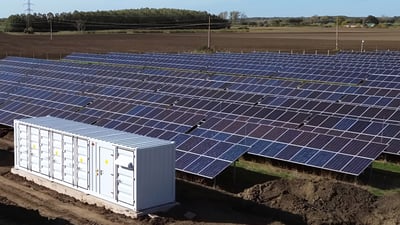
Distributed storage, either paired with solar or standalone, can provide power when and where the grid needs it, while often being deployed faster than new utility-scale generation or major transmission infrastructure. With the right policy framework, Colorado could deploy these close-to-load resources to reduce infrastructure investment needs, lower costs for customers, and accelerate progress on decarbonization goals.
Turning that idea into policy required building a coalition capable of demonstrating to legislators and regulators that a new approach to distributed energy assets could deliver meaningful value for Colorado's grid and its customers.
"If you don't consider location in the resource planning process, you are going to have suboptimal outcomes and miss out on finding the best solutions that can reduce overall system costs."
John Bernhardt, VP of Strategy & Market Policy at Pivot Energy
Results
A New Law & Program to Match.
A bill to meet the moment.
In the Spring of 2024, Pivot Energy's in-house policy team led the strategy and creation of a coalition to draft and advocate for a dispatchable distributed generation program that could pass the legislature.
The resulting bill, known as "Access to Distributed Generation" (SB 24-207), unlocked a path to build distributed resources in the highest-value locations on select distribution feeders and within the Denver Metro Transmission Constraint to provide maximum system benefit.
Throughout the process, Pivot worked closely with the Coalition for Community Solar Access and the Colorado Solar and Storage Association, as well as a range of organizations such as Vote Solar, GRID Alternatives, The Nature Conservancy, the NAACP, and Sierra Club Colorado.
SB 24-207 created a new Dispatchable Distributed Generation (DDG) program and directed the Colorado Public Utilities Commission to establish the procurement framework and, importantly, develop a methodology to recognize the locational value these resources can provide to the grid. For Xcel Energy, the law requires the acquisition of at least 50 MW of DDG by June 1, 2026, followed by an additional 50 MW in 2027 (an additional 30 MW was added by the Colorado Public Utilities Commission (Commission) to support Xcel's pressing resource adequacy needs). The law creates a new pathway for distributed storage and solar-plus-storage projects to compete based on which can provide the greatest value to the electric system.
On May 22, 2024, Colorado Governor Jared Polis signed SB 24-207 into law and set the stage for the next phase of public advocacy to begin at the state's Public Utility Commission.
Program design with the Commission.
Passing the bill was a momentous step for renewable energy in Colorado, but the work was still not done. Turning SB 24-207 into a reality required working closely with the Commission to ensure the program could function effectively.
The Pivot Energy policy team continued to advocate for thoughtful program design that supported true cost/benefit calculations and the inclusion of "locational value," to ensure that distribution-level resources receive a fair shot alongside all other forms of power generation.
The Commission listened, and in the final program rules recognize that where and when new energy resources operate matters. Because these resources will be located closer to customers and will be designed to provide power when the grid is most stressed, these projects can help utilities avoid or defer investments elsewhere on the system. The Commission put the following values on three categories of those savings:
-
$151.70 per kW-year in avoided generation costs, reflecting the capacity the utility would otherwise need to procure:
-
$21.67 per kW-year in avoided transmission costs, reflecting reduced reliance on the high-voltage transmission system
-
$64.74 per kW-year in avoided distribution costs, reflecting infrastructure investments that may be avoided or deferred on the local grid.
As Commission staff stated in their testimony on the importance of this avoided cost framework, "using the applicable avoided cost values recognizes that projects located on certain parts of the system provide different value to the system. A project that is located on a constrained feeder within the Denver Metro Transmission constraint likely provides more benefit than a project on an unconstrained feeder on the periphery of the Company's system, even though the latter project may be less expensive to develop. The avoided cost values allow for comparisons among bids in terms of the likely value they provide to the system, rather than simply in terms of costs."2
Together, these values total $238.11 per kW-year and provide a benchmark against which bids into the program are evaluated. The framework recognizes a fundamental benefit of distributed energy resources: a megawatt of strategically located resources reduces the need for investments in generation, transmission, and distribution elsewhere on the system.
The program launches.
After two years of work, Xcel Energy issued its first Dispatchable Distributed Generation (DDG) Request for Proposals on June 9, 2026, implementing the framework established under SB 24-207. The RFP seeks to procure at least 50 MW of DDG capacity in 2026, plus an additional 30 MW to support resource adequacy needs, with bids due in Fall and awards expected in November.
Xcel plans to issue another 50 MW DDG solicitation in 2027. The launch marks a significant milestone for distributed generation in Colorado: two years after SB 24-207 became law, the state is moving from policy design to deployment, creating a new pathway for dispatchable distributed resources to help meet Colorado's evolving grid needs.
Pivot is proud to have led the effort to build this new program, and the company's policy team plans to continue advocating for more dispatchable distributed generation programs nationwide.
"We strongly support the DDG provisions. SB 24-207 reflects a deliberate legislative transition toward dispatchable distributed generation paired with energy storage, which is a resource type that can provide grid capacity during peak demand periods, reduce curtailment of utility-scale solar, and help the utility manage down long-term generation, transmission, and distribution capital spending."
Colorado Public Utilities Commission, Final Decision
1 Public Service Company of Colorado's 2024 Electric Resource Plan (Proceeding No. 24A-0442E)
2 Hearing Exhibit 507, Settlement Testimony, Staff Witness, Eric Haglund, Proceeding No. 25A-0194E, Page 17 of 34